

At Peace of Mind we often explore the concept of Collective Effervescence, that intense emotional state of unity where individual identities dissolve into a singular, vibrating collective. Modern techno purists might look at a 1970s Grateful Dead tape and see only tie-dye and guitar solos, they are actually looking at the architectural blueprint for the contemporary rave.
The Grateful Dead were not just a band; they were a nomadic sound system. They didn’t just play songs; they engineered “zones” for self-actualization. If you strip away the instruments, the DNA of the “Dead” experience is the exact same frequency we chase in the dark rooms of Berlin or the industrial outskirts of Paris.
Year Zero: The Acid Tests as the First Rave
Before the warehouse was a sanctuary, there were The Acid Tests. Organized by Ken Kesey and the Merry Pranksters in the mid-1960s, these happenings were the “Year Zero” of rave culture. The Grateful Dead (then The Warlocks) acted as the house orchestra, but they weren’t the center of attention. The experience was.
With strobe lights, fluorescent paint, and experimental audio loops, the Acid Tests broke the “fourth wall” of performance. There was no “stage” and “audience” only participants. This is the fundamental pillar of the underground: the DJ is not a rockstar to be stared at, but a facilitator of a shared ritual.
The Wall of Sound: From Owsley to DVS1
Another connection between these worlds is the obsession with audio as a physical environment. In 1974, the Dead debuted the Wall of Sound, a pioneering PA system designed by Owsley “Bear” Stanley. It was a towering monolith of hundreds of speakers that treated sound as a physical force ensuring that the person in the back row felt the same crystal-clear vibration as the person in the front.
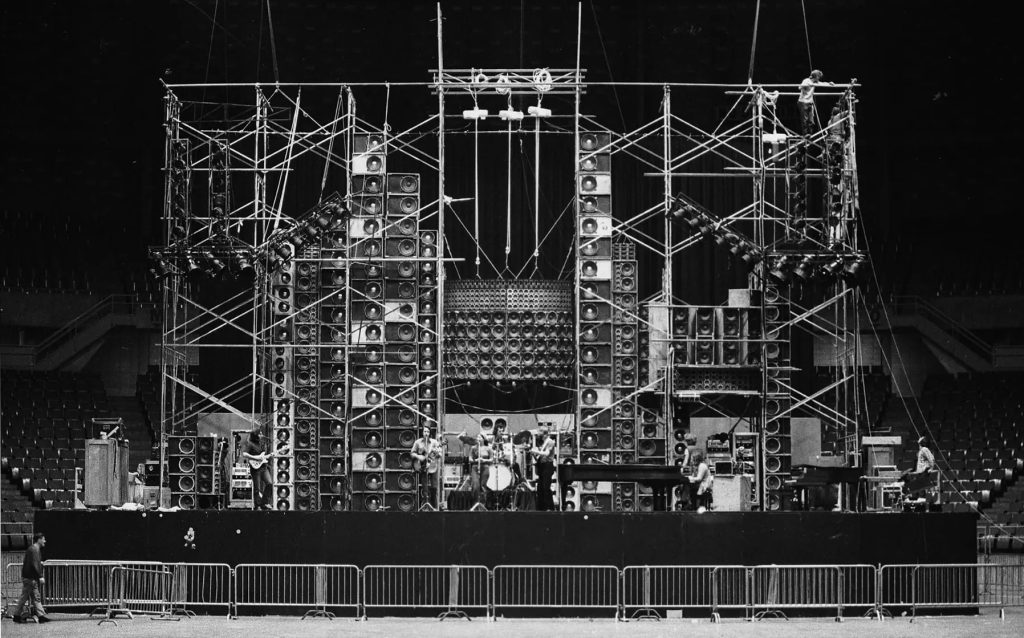
Decades later, this philosophy lives on through purists like DVS1 (Zak Khutoretsky). His own “Wall of Sound” event series is more than just a tribute in name; it is a structural evolution of the Dead’s mission. Just as Owsley wanted to remove the “muddiness” of traditional concerts, DVS1 uses massive, high-fidelity stacks to create a literal wall of pressure that demands submission.
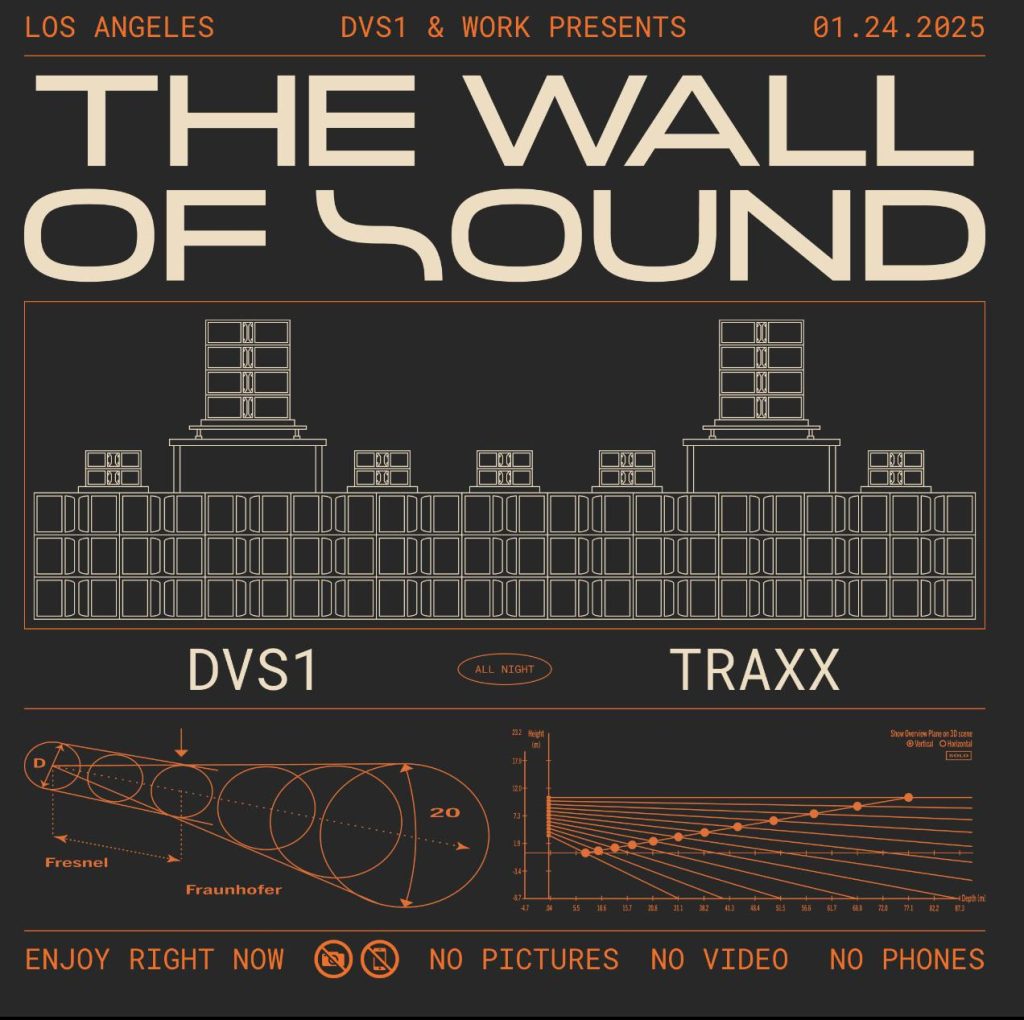
In both the 1974 Dead shows and a DVS1 Wall of Soundset, the “Wall” serves a sociological purpose: it de-centers the performer. By placing the focus on the speakers rather than the people on stage, the audience is forced to stop staring at a “rockstar” and instead face the music and each other. The sound system becomes the headliner, and the dancefloor becomes the stage.
A Mirror Image: The DNA of the Tribe
While the fashion has shifted, the social architecture of these two worlds is identical. In the 60s, it was the Magic Bus, Further, and a fleet of colorful vans following the band. Today, that nomadic spirit lives on in the global “Festival Circuit.” Both cultures are built on the idea of a Temporary Autonomous Zone (TAZ), a society that exists wherever the music lands.
This tribe operates on an economy of generosity. Long before the global exchange of digital tracks, there was “Tape Trading.” The Dead encouraged fans to record their sets, creating a non-commercial economy based on passion rather than profit. This is the spiritual ancestor for the “SoundCloud set” a way for music to belong to the collective rather than the corporation.
The Infinite Segue: From “Dark Star” to the 303
A segue (pronounced seg-way) in communication is exactly like a DJ mixing because it isn’t just about stopping one thing and starting another; it’s about maintaining momentum.
The Grateful Dead were essentially the first “DJs” because they mastered the art of the segue. Their sets were a continuous flow, using improvisational “Space” and “Drums” to transition between moods without ever stopping the beat.
This is the heartbeat of a true DJ set. It’s not about “tracks” or “drops” it’s about the journey. Whether it’s a 30-minute psychedelic jam or a 9-hour vinyl techno set at Berghain, the goal is to maintain a state of “flow” where time ceases to exist. Both cultures center on a rite of passage: the moment the ego dissolves and the “Sound System” becomes the heartbeat of the room.
A Heritage of Transcendence
The “Acid Test” spirit never died; it just upgraded its hardware. We are still the same tribe, gathered around the same speakers, chasing that same moment of communal ecstasy. But to truly understand the pull of the Wall of Sound – whether in 1974 or 2026 we must look back further than the 1960s. We must look to the polyrhythmic traditions of African tribal dance rituals, the ancestral foundation of all trance-based culture.
Long before the electric guitar or the synthesizer, the drum was the technology of transcendence. In the communal rituals of the Yoruba or the San people, the repetition of the beat served as a vehicle for the “divine madness”, a state where the individual ego is surrendered to the collective spirit. The Grateful Dead’s “Drums and Space” segments and the relentless 4/4 kick drum of a House or Techno set are simply modern iterations of this ancient rhythmic pulse. They are all designed to trigger entrainment, where the brainwaves of an entire crowd synchronize to a single frequency.
From the liquid light shows of the 60s to the subtractive minimalism of a modern techno rig, the mission remains unchanged: to take the test, find the frequency, and keep moving further. We are participating in a lineage of dance that spans millennia, a continuous thread of human experience that links the firelight of the savannah to the strobe lights of the warehouse.
2 responses to “The Long, Strange Trip: Why the Grateful Dead Were the Architects of the Modern Dancefloor”
Great post. I love this connection and the mention of Ken Casey! Thanks Peace of Mind!
Yes! Thank you for this ode to the dance music lineage ❤